
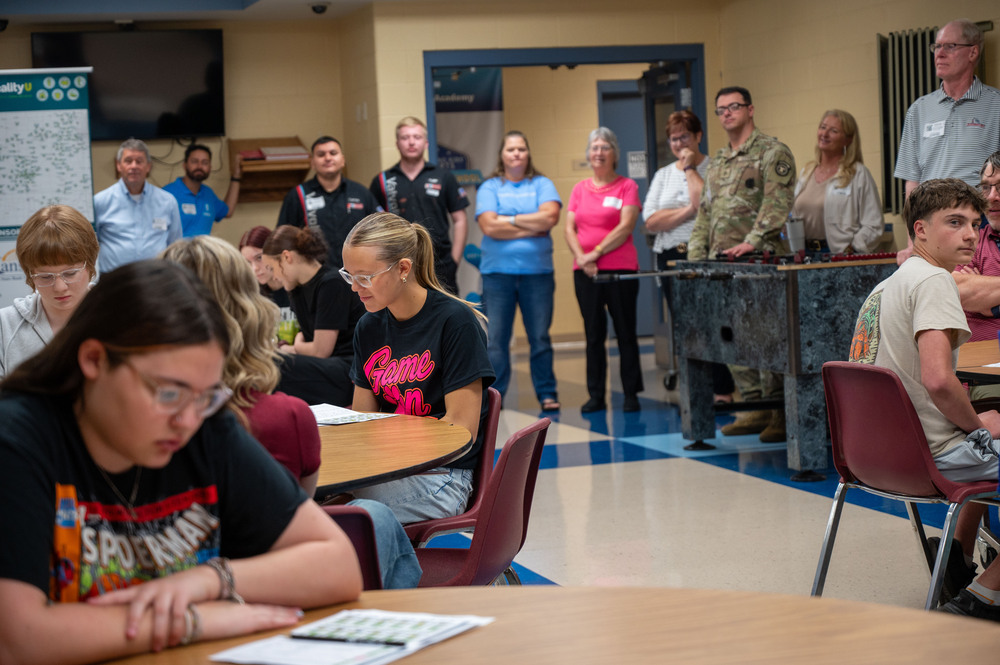
Students at Goddard Academy recently stepped into a real-life version of “The Game of Life” through the Pando Initiative's Reality U program, an interactive financial literacy simulation designed to help students understand the realities of adulthood.
With the support of community volunteers, school staff and program facilitators, students were given the opportunity to fast-forward to age 26 and experience the financial decisions that come with adulthood. Before the simulation, students selected a preferred career path and completed a lifestyle survey that included factors such as GPA, marital status, dependents and pets. Reality U then used those responses to generate an individualized financial scenario, including a projected monthly income.
As students moved through a series of booths representing real-world expenses, they were required to make decisions about housing, transportation, insurance, childcare, food and other financial responsibilities while staying within a budget.
According to Goddard Academy Principal Brian Gee, the experience is one of the most valuable lessons students receive all year.
When Gee joined the district in 2018, implementing Reality U was a top priority. He said that of everything students learn throughout the year, this is one of the most important lessons because it prepares them for life beyond the classroom.
Following the simulation, Reality U facilitator Patrick Sehl Jr. encouraged students to reflect on what surprised them most. Childcare, vehicle expenses, insurance costs and food topped the list.
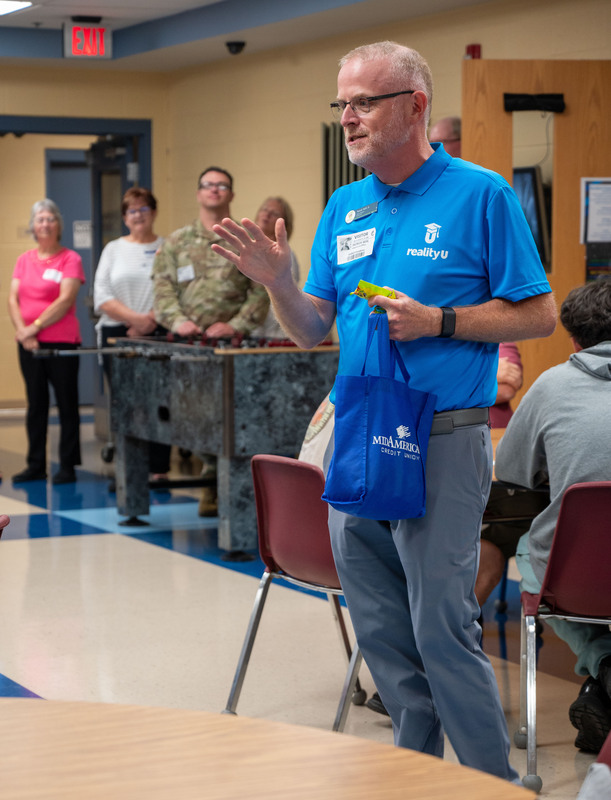
One student noted that a car salesman initially showed only high-end vehicles, illustrating a key lesson built into the program: consumers must be willing to ask questions and explore more affordable options. Several students were also surprised by how quickly restaurant meals and dining out could affect a monthly budget.
Volunteers used their own experiences to reinforce the lessons students were learning.
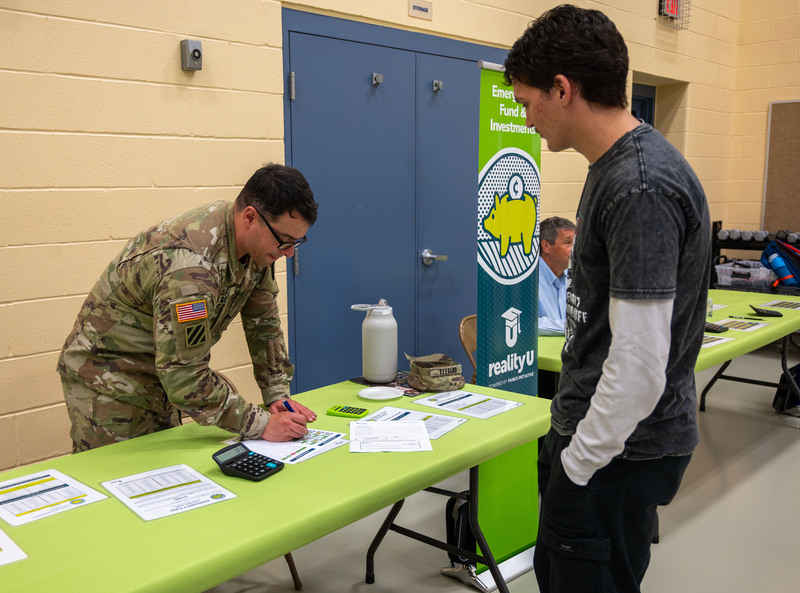
Staff Sgt. Thomas Goyette of U.S. Army Recruiting shared the importance of financial planning, saving and maintaining both a plan and a backup plan. He recounted a time when the catalytic converter was stolen from his vehicle, explaining how having insurance and his planning and savings helped him manage the unexpected expense.
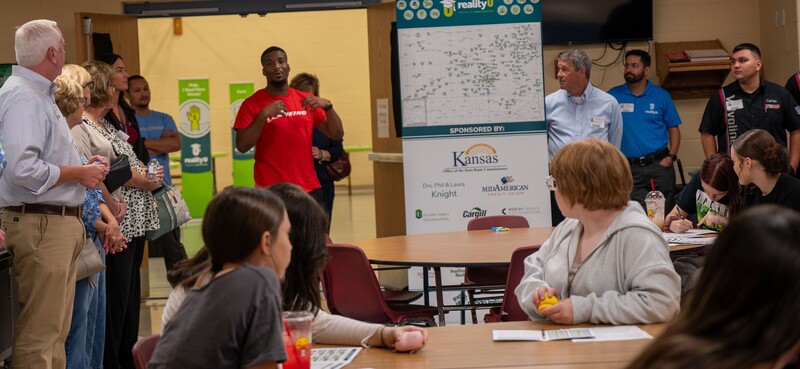
Jakobe Davidson of Boeing also encouraged students to seek advice when making financial decisions.
“Don't be afraid to ask for help,” Davidson said. “Pride and ego can be big hurdles, but it's important to seek advice.” He also reminded students that businesses may attempt to upsell products and services, making it essential to understand personal financial limits and make informed decisions based on individual needs.
At the end of the session, Sehl asked students what they planned to tell their parents about the experience.
One student admitted they struggled to manage their budget during the simulation and planned to ask for guidance. Another student, said she intended to thank her father for teaching her important financial concepts beforehand.
By providing students with realistic financial scenarios and hands-on decision-making opportunities, Reality U offered more than just a lesson in budgeting. It gave students a meaningful look at the challenges and responsibilities of adulthood while helping them build skills and confidence for the future.